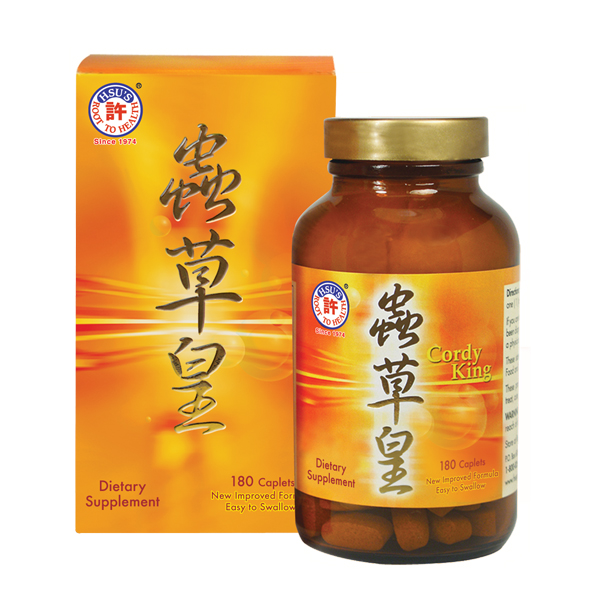
Hsu’s Root to Health introduces the Cordy-V, a new supplement product line made from Cordyceps mushrooms, in an easy to take caplet form.
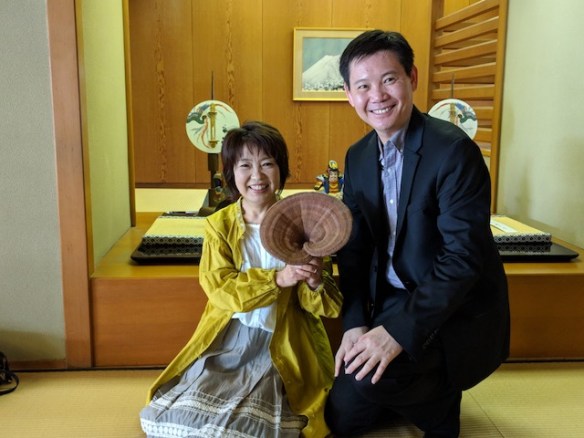
The Cordyceps is known to form on the body of a caterpillar, harvested typically in the highlands of China. For multiple generations, people have followed the Chinese and Tibetan tradition using this mushroom for its benefits *
The Cordy King line from Hsu’s Root to Health uses a cultivated lab-grown Cordyceps that is similar to a wild Cordyceps. This product also features an essential B vitamin set of B1 (50mg), B2 (50mg), B6 (50mg) in additional to royal jelly. To see other Hsu’s Root to Health products Click Here.
The cultivated lab-grown Cordyceps which is similar to the wild one can now be found in the form of a caplet in a new product from Hsu’s Root to Health.
*These statements have not been evaluated by the FDA. This product is not intended to diagnose, treat, cure or prevent any disease.
* These statements have not been evaluated by the Food and Drug Administration. These products are not intended to diagnose, treat, cure or prevent any disease.
* These statements have not been evaluated by the Food and Drug Administration. These products are not intended to diagnose, treat, cure or prevent any disease.
Source: Will Hsu, UW Marathon County “Good Ideas” Conference, January of 2016
If you have been following us for awhile, you already know that our Ginseng business started in 1974 by Paul Hsu.
However, ginseng itself has been around for thousands of years and has its a really deep history in Chinese Culture.
The History
The first recorded description of ginseng and its usage appears in a classical Chinese Traditional Medicine text: “Shennong Bencao Jing”, nearly 2,400 years ago.
This text is considered to be bible of Traditional Chinese Medicine.
It depicts a lot of the herbs, products, and plants that were used in early China, particularly in the Han Dynasty.
It’s important because the Han Dynasty is located primarily around Northern China.
You’d only find Ginseng in some parts of North Korea, and the most northern parts of China.
As Chinese Dynasty’s continued to migrate south, they became more distant from some of those earlier texts that really prescribed the use of ginseng and other products.
It was used here and there, but given the distance and the rarity of the plant, it was really reserved for royalty.
Ginseng is prescribed in detail in the late Han Dynasty medicinal text “Shanghan Lun” Treatise on Cold Damage Disorders by preeminent Chinese physician Zhang Zhongjing around 200 AD. Nearly 20% of the remedies prescribed in this text contained references or usage of Asian ginseng.
Chinese physician Zhang Zhongjing around 200 AD
Because Asian Ginseng is heating/stimulating, they used it as a fever relieving remedy.
The idea was to to take Ginseng to help the body sweat out toxins.
The concept was to treat “hot” with more hot.
Traditional Remedies followed similar concepts.
Hot Tea
Sweat Lodges
Chicken Noodle Soup
Because of the northern climate in China, Asian Ginseng was also used in winter. It does help promote circulation and blood flow.
Because of the promotion of blood flow, there is also a belief that ginseng aids in virility.
This is what people from the West have assumed ginseng was used for in Eastern culture.
However, it was originally used as a cold remedy.
It is referred to as one of the “King Herbs” of Traditional Chinese Medicine.
For nearly 1500 years, ginseng was contained to China and used exclusively for imperial royalty.
Examples: Senior officials, people in court, and those close to the Emperor.
The Ming Dynasty started allowing Westerners in to study, research, and share knowledge.
This is when westerners first started hearing about Asian Ginseng
Ginseng first appears in Western records by the end of the Ming Dynasty by the Italians
Probably because of influences like Marco Polo, as they are trading with the Chinese.
The Italians were some of the first discoverers by land and by sea to exchange and trade information with other cultures.
In the 1700’s, Father Jartoux, a French Jesuit missionary who traveled to China to Study Traditional Chinese Medicine and wrote extensively about Asian Ginseng.
Illustrations in the “Memoir of the Royal Academy in Paris (1709)”
Translated into English in “The Philosophical Transactions of the Royal Society of London (1711)”
Through the early 18th century all records and documented usage of ginseng was of the Asian ginseng species.
Ginseng was used by the Iroquois and other Native American tribes at the time of it’s discovery in the “New World”.
Jesuit missionary Father Lafitau is credited in 1718 with the discovery of American Ginseng in Quebec after reading Father Jartoux’s earlier writings on Asian Ginseng.
He believed that conditions in North America were suitable and similar in climate which Asian Ginseng was found.
Father Lafitau
He worked with Iroquois and Mohawk herbalists or healers to search for and eventually identified the plant and took botanical plates (drawings).
Trading of ginseng commenced between French-Canada and China along fur trading routes.
Ginseng was soon discovered thereafter in the British Colonies of the modern-day United States.
Wild Ginseng and Fur continued to be intertwined commercially in North America for nearly 200 years, until the late 1990’s
Anyone who was trading in furs typically traded in ginseng.
Think of the Fromm Farm in our area!
When you were out trapping animal pelts in the fall, you are also out in the woods hunting wild ginseng.
As ginseng markets fluctuated over the years, some farmers were able to generate enough income based off of their ginseng crop alone. This led to the cultivation of ginseng.
Disclaimer: These statements have not been evaluated by the Food and Drug Administration of the United States. This product is not intended to diagnose, treat, cure, or prevent any disease.
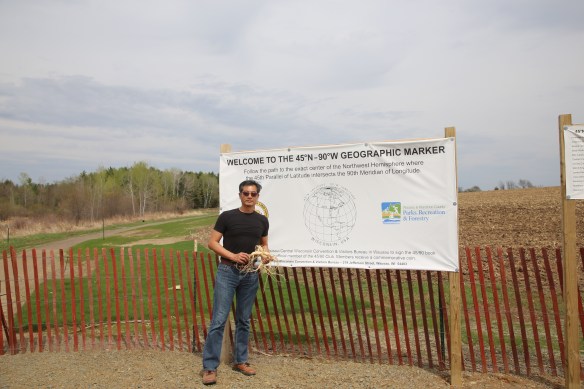
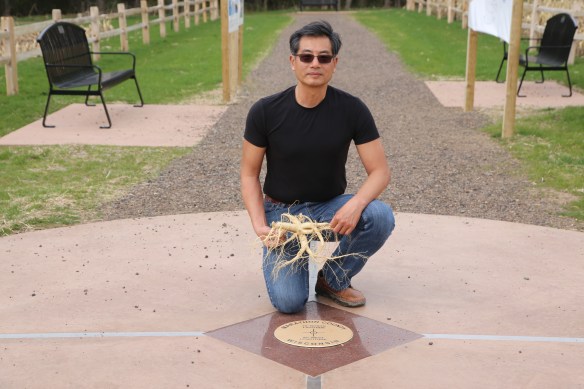
#1 – Land – Look for land with a slight slope, make sure that ginseng has not been grown on this land before. “45th parallel is where we grow ginseng at Hsu’s”. We are constantly on the lookout for parcel’s of property to rent or lease.
This map shows shows what typical plots of land in Marathon County look like. Highlighted in Orange, ginseng fields can be found by their black shade covering.
#2 – Soil Preparation – Raise the beds in mounds, will allow for tractors to access the fields. Beds being raised up in mounds will also help prevent roots from disease such as root rot etc
Tractors have come through to raise the beds and hay has been laid down for additional protection in the Spring
#3 – Seed – Seed is stratified for one year (helps with germination rate/success of crop coming up), placed in the ginseng field (beds/mounds) with a tractor.
Word of the day: “Stratified” – (verb) – to place (seeds) close together in layers in moist sand or peat to preserve them or to help them germinate.
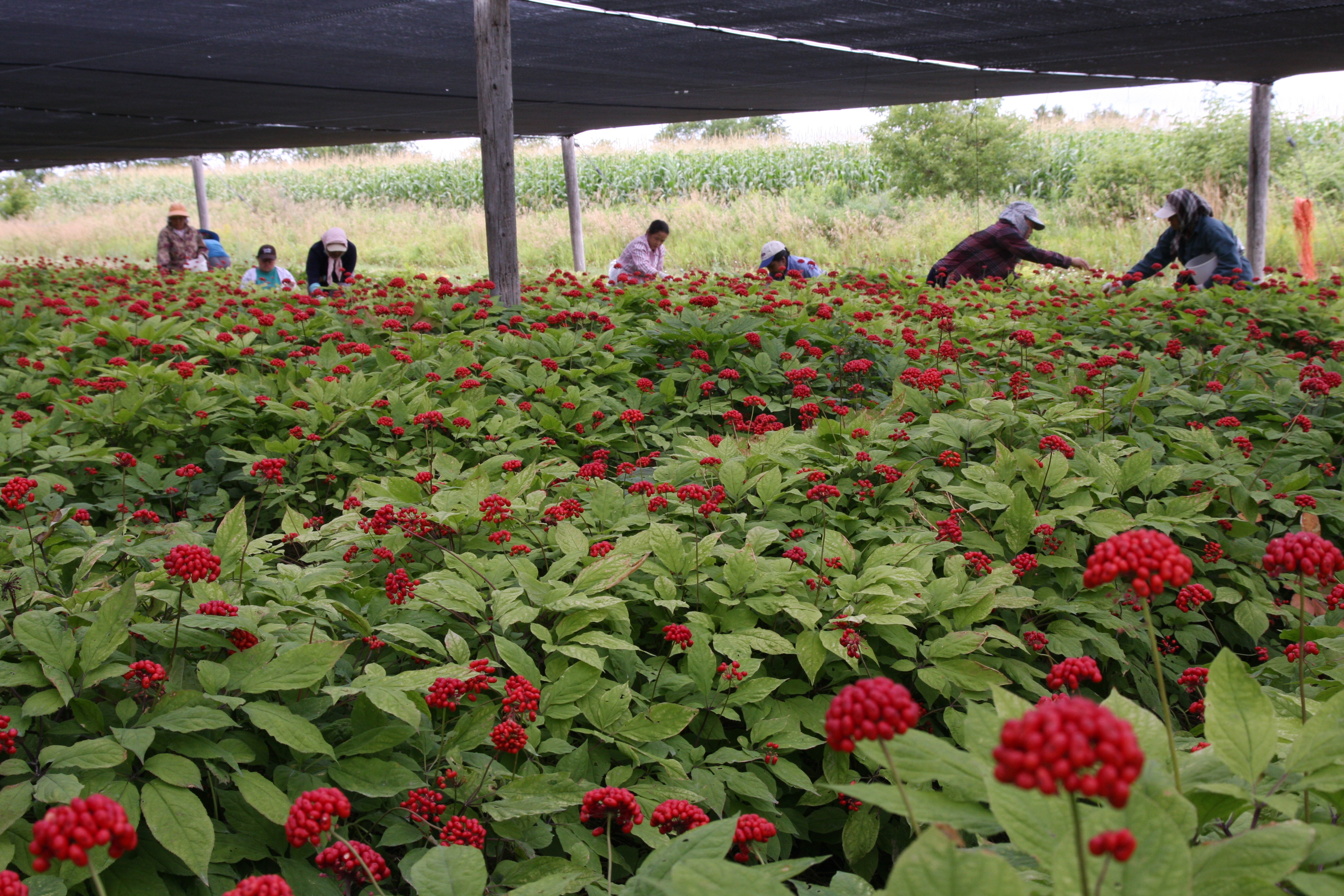
#4 – Shade Structure – 65 percent shade with wooden racks/70 percent shade with tarps. Helps keep ginseng plants alive, as they need shade in order to survive. Shade structure is held up by adding 9 foot high posts in garden which help keep the tarp/racks up.
This photo is a great example of how the shade fabric gets put up, however, this photo was actually taken from 2010, when a large summer storm knocked down most of the shade fabric from our ginseng gardens.
During
#5 – Weeding – Weeding is done multiple times a year. Everything is weeded by hand to help eliminate some of the undergrowth/weeds which cam effect how the ginseng is grown.
#6 – Collect Seeds – Seeds are collected from 3-4 year old ginseng plants. They are picked by hand in August/September when the green seeds become a red ripe color. Seeds are then de-pulped and stratified for one year to help with the germination process for next year garden.
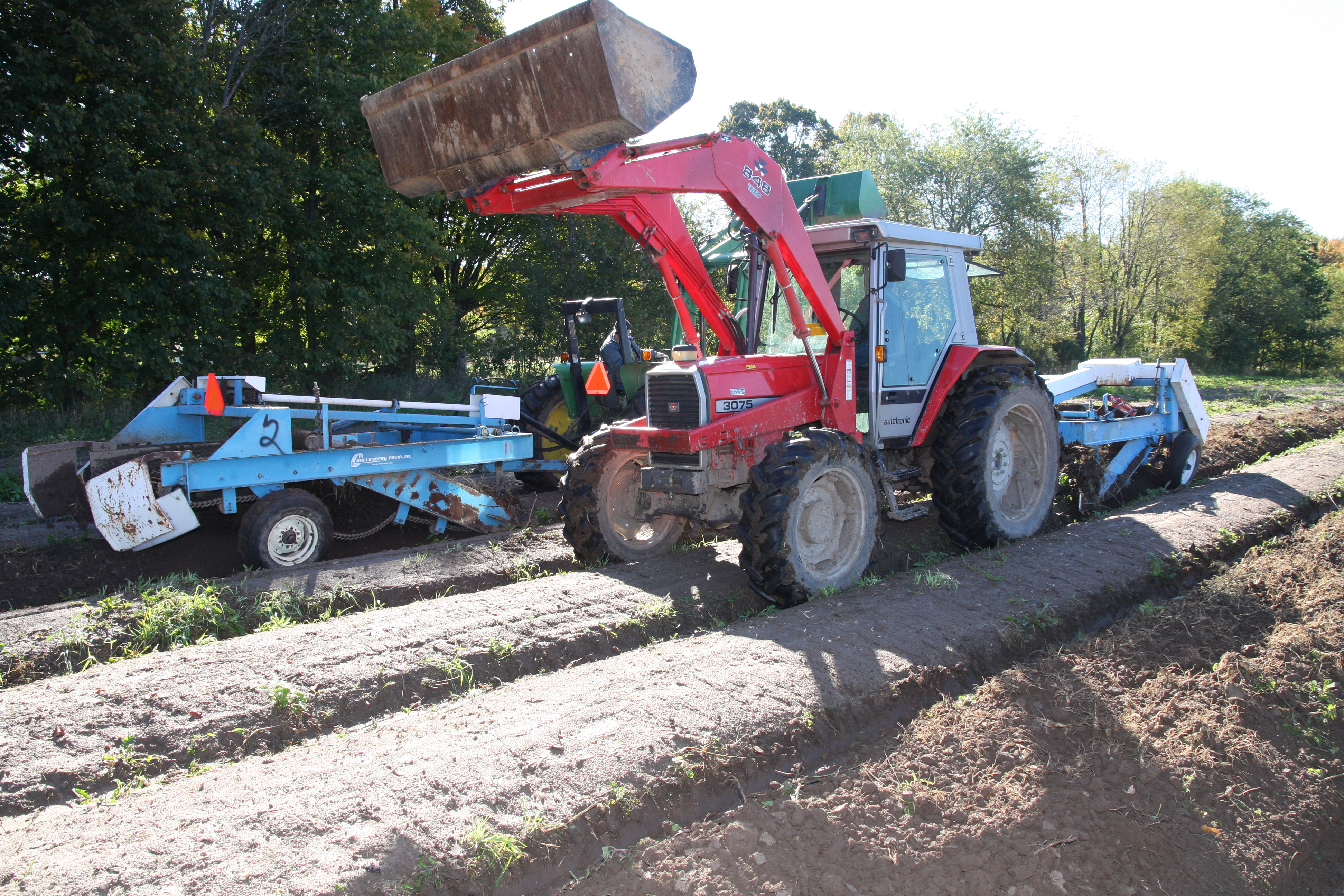
#7 – Harvest – Harvest season is normally done in October, or before we incur too cold of weather (as we try to leave the roots in the ground as long as possible before we harvest them). All roots are dug up by a tractor and picked by hand/with a tractor.
Harvesting starts by taking a modified potato digger to the raised ginseng beds. What doesn’t get picked up by our motorized equipment will be picked by hand.
After
#8 – Cooling – After the roots are dug up by hand they are brought to a large cooler. The roots are cooled for 2-3 weeks. By cooling the roots it makes them easier for us to slice, as well as brings out the sugars and carbohydrates in the roots to give them a nice flavor.
Freshly dug ginseng is categorized by a field (or lot) number and is placed in the cooler
#9 – Wash – The roots are then removed from the cooler and put on a conveyor belt, and are washed. This cleans the roots and gets them ready for the drying process.
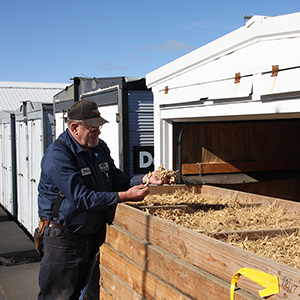
#10 – Dry – The roots are then put in a kiln for 10-14 days which they are rotated every couple days. This allows for the roots to obtain a nice wrinkle, and absorbs about 95% of the water out of the root so it will stay good for up to 3 years.
Ginseng Roots Dried and inspected in our kilns
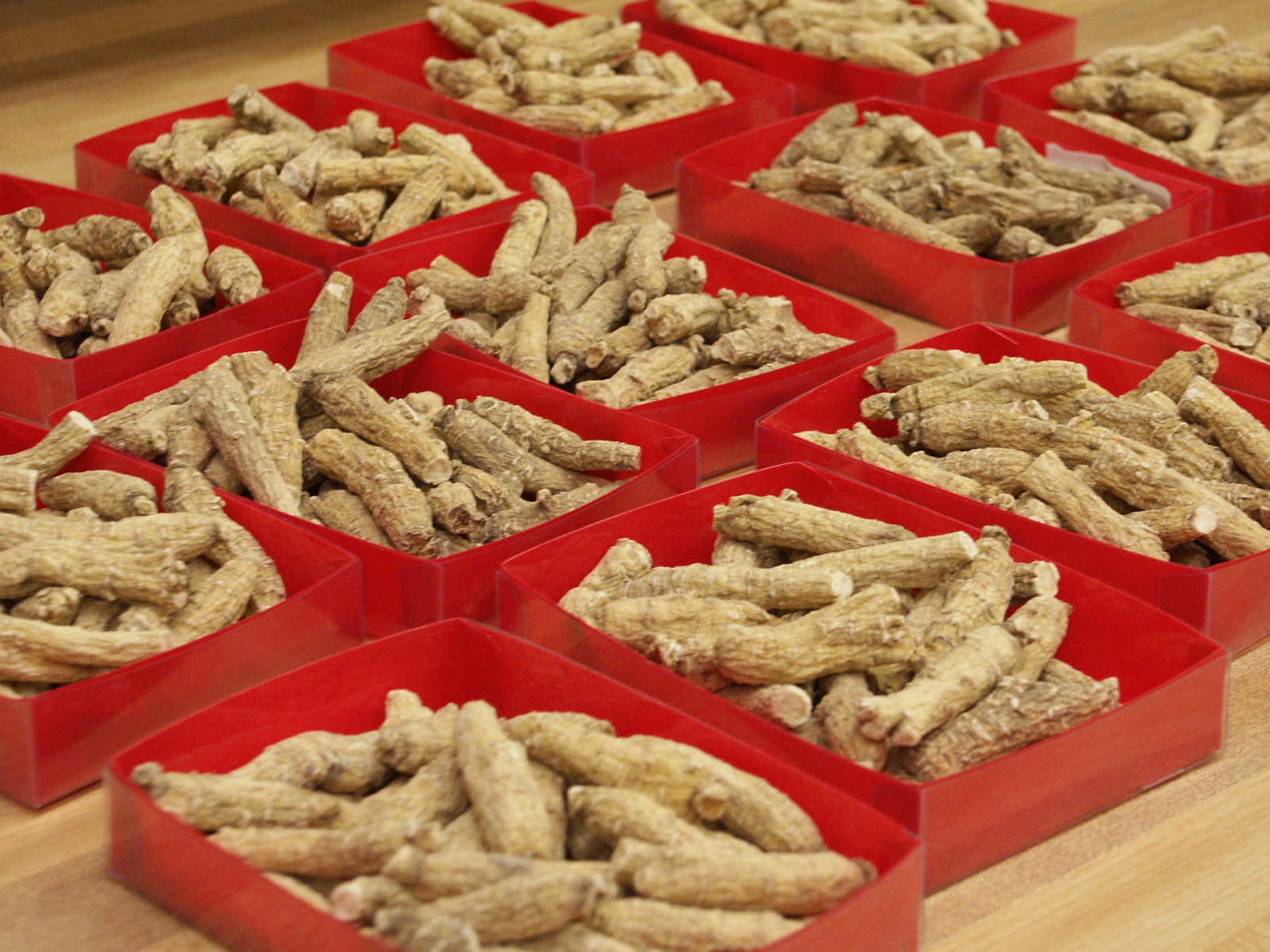
#11 – Grading – Roots are then barreled and sent off to be graded. We grade about 26 different grades in the United States and about 40 different grades in China. The prongs and fiber are also removed from the root and graded as well.
Graded Ginseng Roots in Barrels – did they pass the test? Each root is unique, but grading allows for consistent sizing and packaging.
#12 – Packaging – Once the roots are graded they are all individually packaged by hand. They are put in a nice Hsu’s Ginseng Enterprise box and are ready for sale.












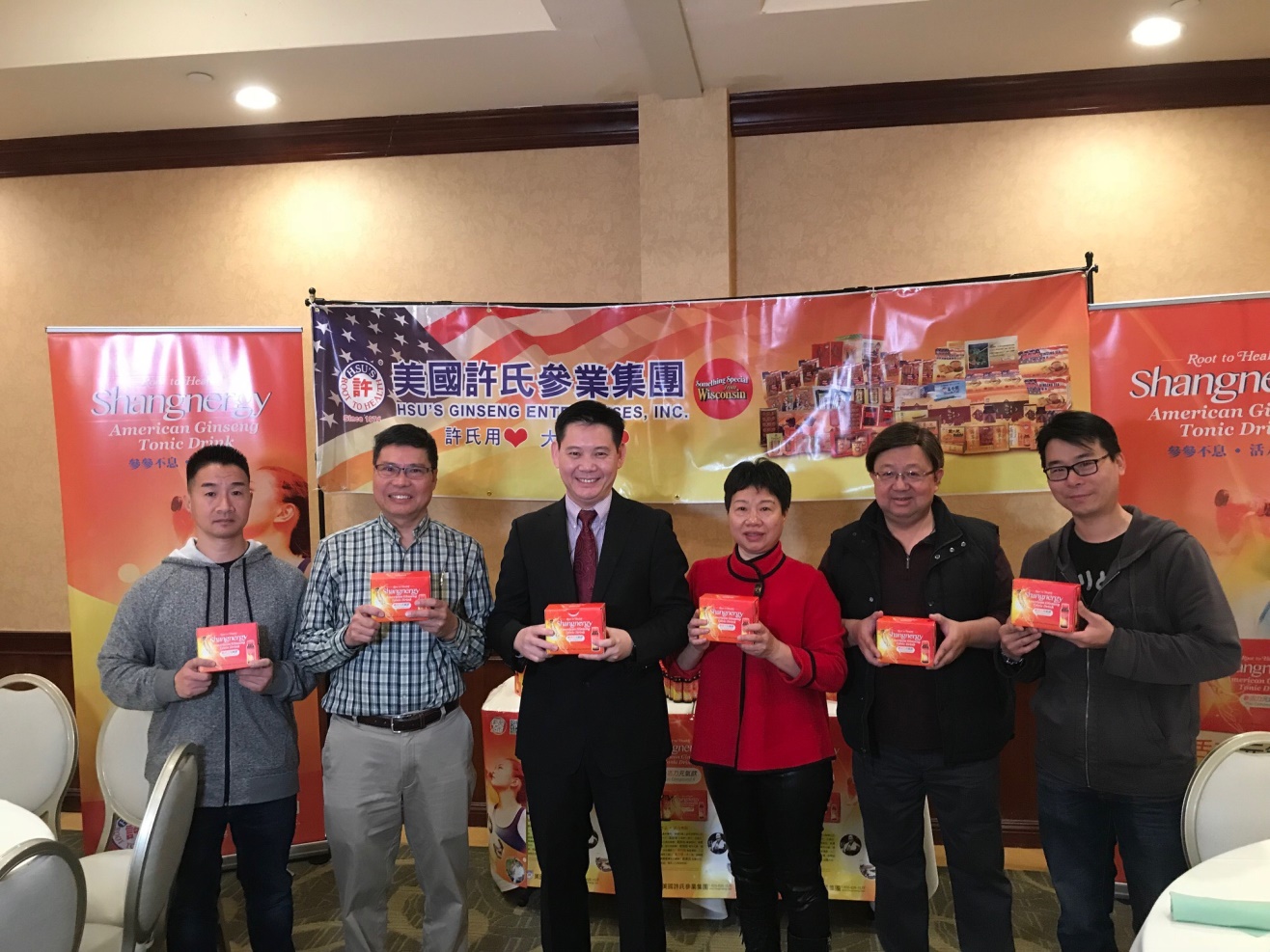


 Hsu's Ginseng Enterprise Inc